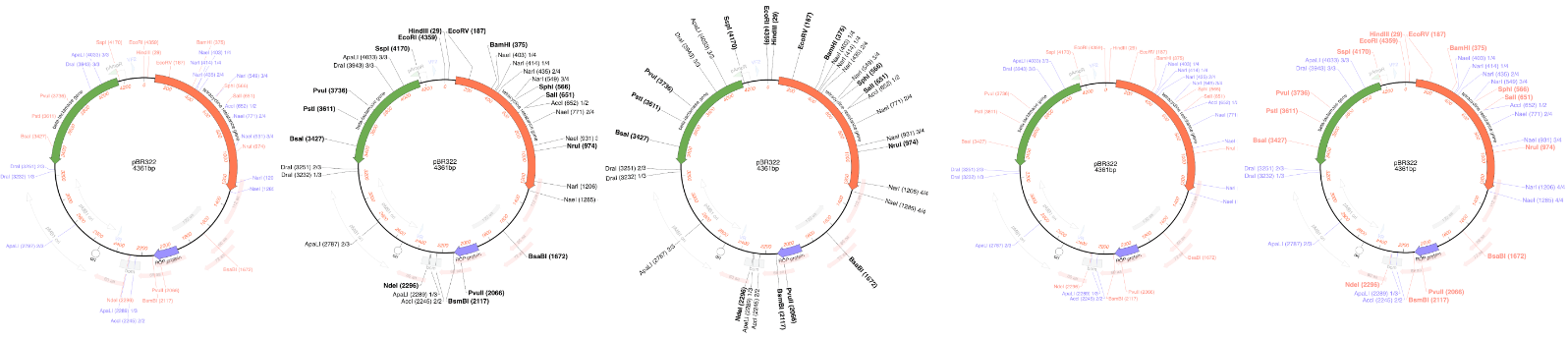
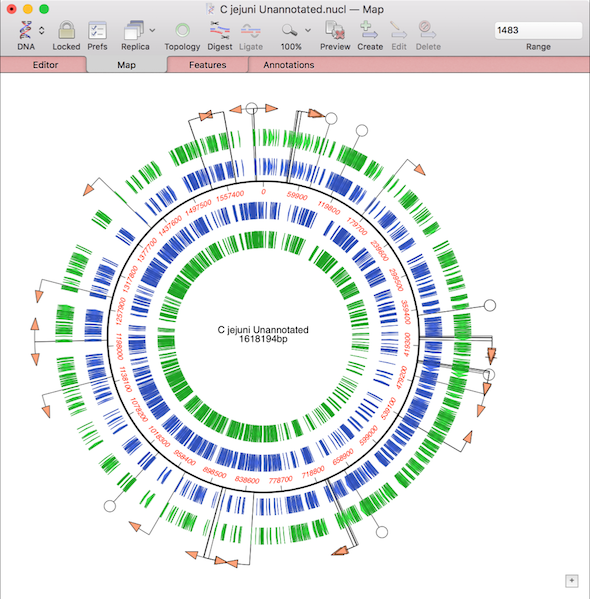
We are pleased to announce our latest release. MacVector has always been about producing beautiful plasmid maps. Our latest release MacVector 26.1 takes this to a new level with customization of dynamically generated maps with SmartLine graphics. SmartLine Graphics MacVector gives the user great flexibility for customizing graphical maps. They look how you want them…
MacVector has always been about producing beautiful plasmid maps. Our latest release MacVector 26.1 takes this to a new level with customization of dynamically generated maps with Smart Line graphics. MacVector gives the user great flexibility for customizing graphical maps. They look how you want them to look. Every aspect can be changed, fonts, colours,…
Apple released macOS Golden Gate on Monday (14th Sept 2026). Over the past few months we’ve been testing MacVector on development betas of macOS Golden Gate. We are happy to share that MacVector 26 is fully supported on macOS Golden Gate. Known Issues Legacy versions of MacVector. MacVector 26 is a fully Universal Binary application…
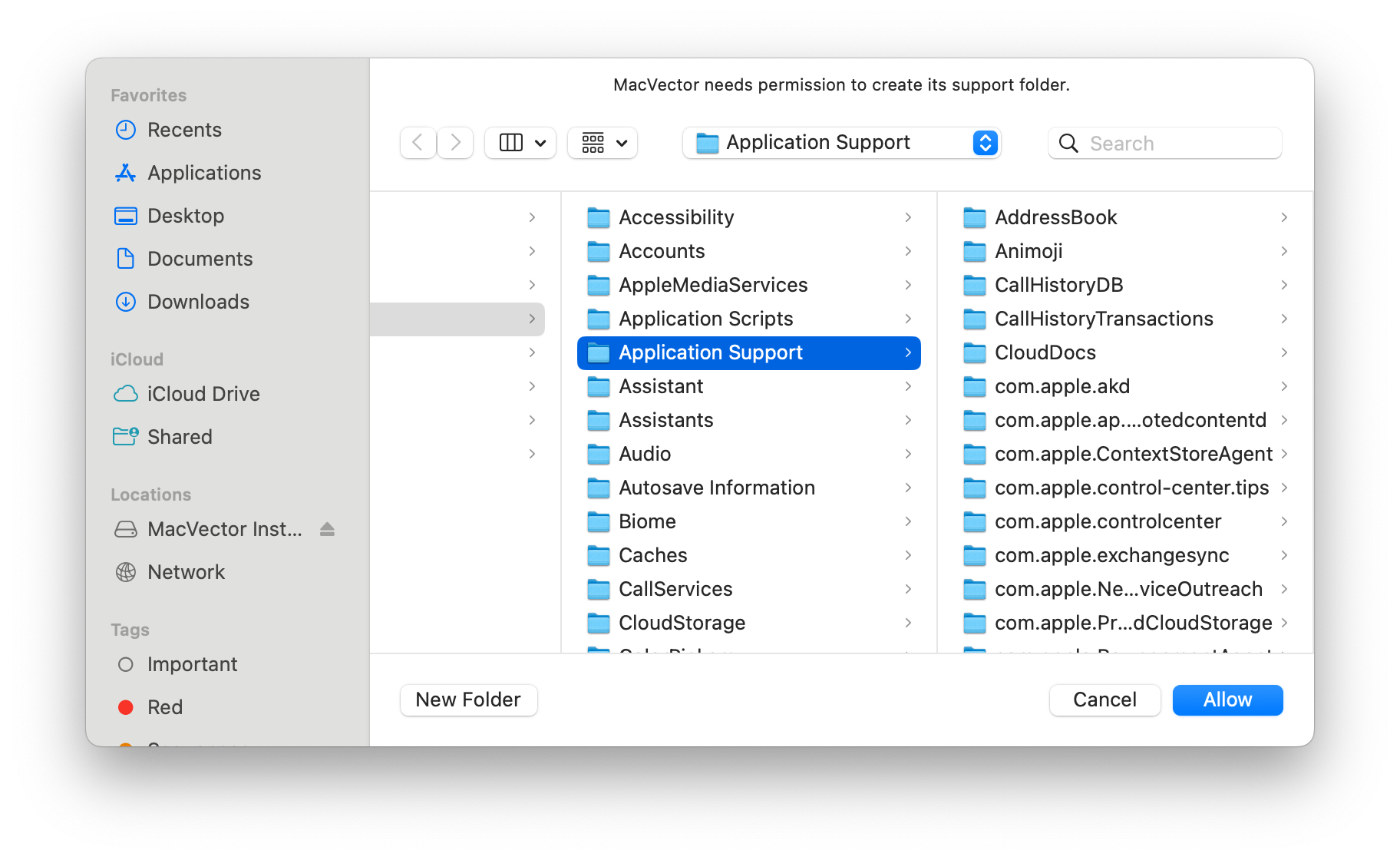
Our latest release MacVector 26 is now a sandboxed application following Apple’s guidelines. For many years now, Apple has encouraged developers to create applications that run in a Sandbox on macOS. This protects your computer and your data from intentional or accidental data access or corruption from a rogue or poorly written application. Our website has a technical explanation of macOS Sandboxing. However,…
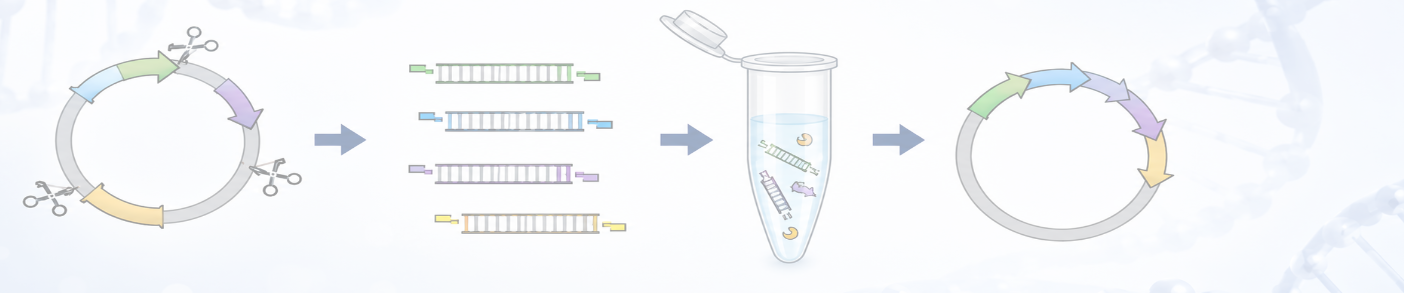
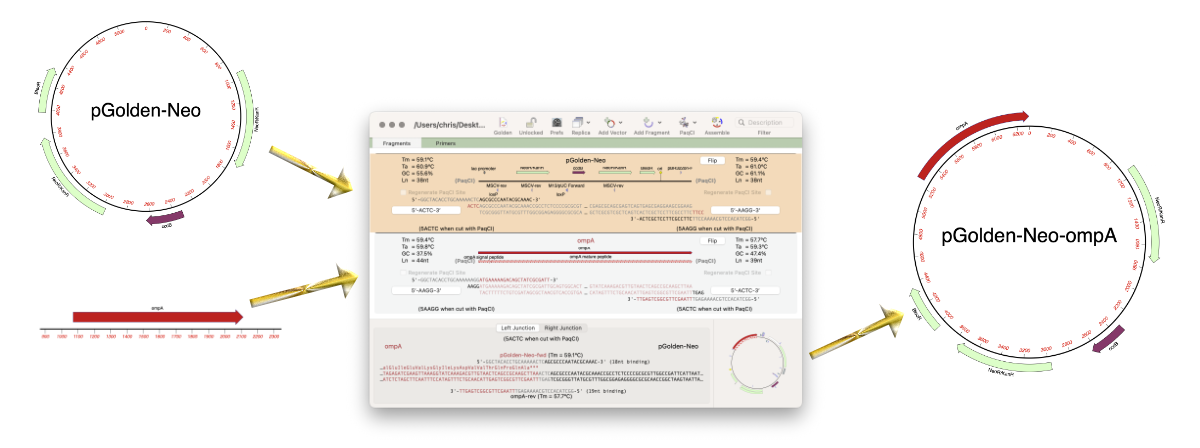
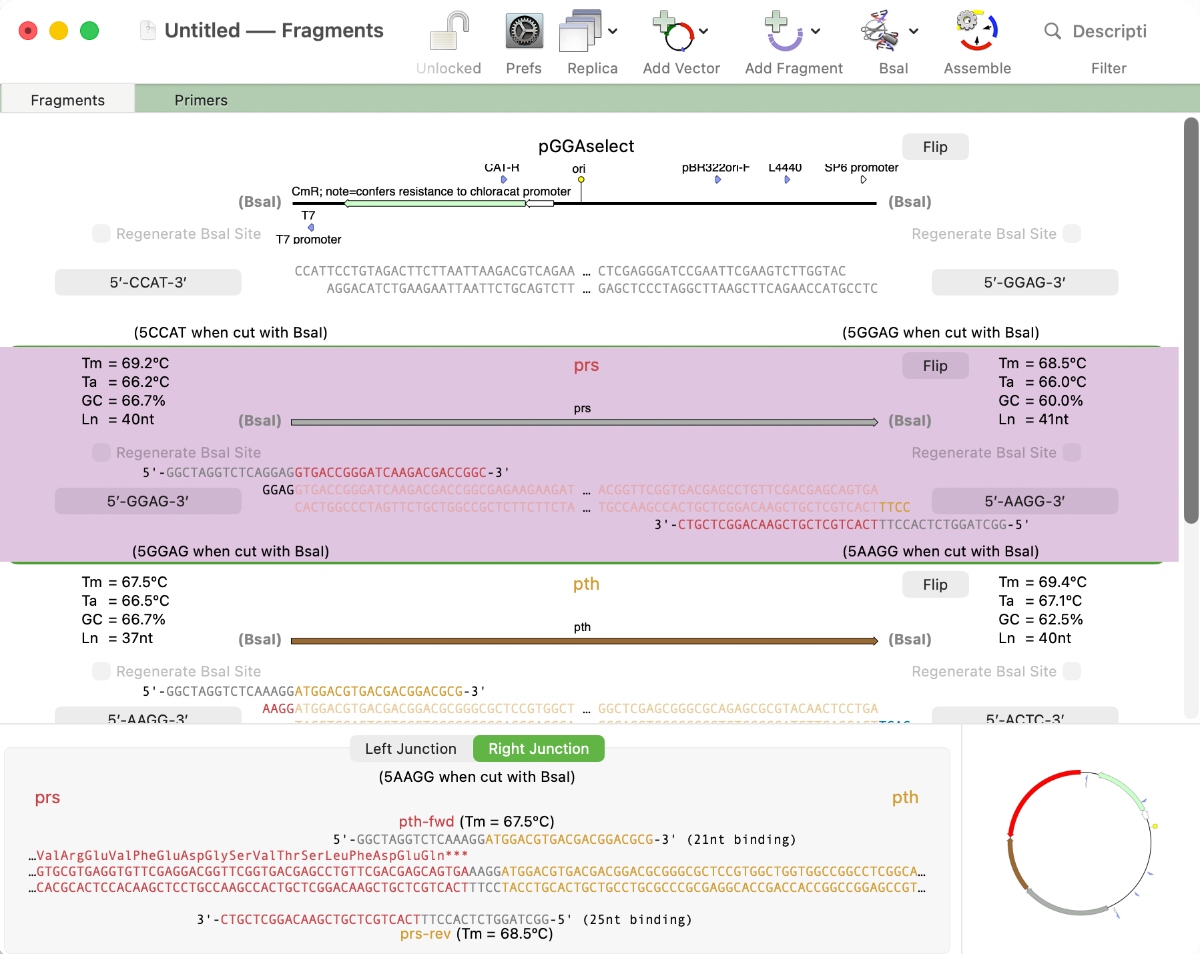
MacVector 26 (released July 2026) saw the addition of Golden Gate Cloning to the Cloning Project Manager. Golden Gate Cloning is a molecular cloning technique that enables the seamless, orderedassembly of multiple DNA fragments into a single construct in one reaction. Its defining featureis the use of Type IIS restriction enzymes, which recognize specific asymmetric…
MacVector 26 was released last week (13 July 2026) and it’s a significant release. MacVector 26 has new features for designing and documenting cloning workflows and for managing your sequences. The new Cloning Project Manager allows you to design Golden Gate Cloning workflows. So along with Ligase Independent Cloning, Gibson Assembly and traditional restriction enzyme…
For many years now, Apple has encouraged developers to create applications that run in a “Sandbox” on macOS. In fact, for the last few years, any application downloaded from the Apple App Store must be set to run in a sandbox. This protects your computer and your data from intentional or accidental data access or…
MacVector 26 sees the addition of Golden Gate Cloning to MacVector’s Cloning Project Manager We are just putting the finishing touches to a new Golden Gate Cloning interface for our next release of MacVector. Based on our existing Gibson Assembly interface, this new functionality lets you design constructs using the popular Golden Gate approach. This takes advantage…
Sometimes it’s a simple visualization of your sequence that you need or you want to quickly annotate an interesting part of your sequence to investigate later. So in addition to displaying a rich visual representation of your sequence and its features in the Map tab, MacVector can also show specific regions directly in the Editor tab. For instance, you…
One of the more challenging aspects of dealing with large eukaryotic genomes is that most are incomplete and have many gaps. Often the genomes are available as a collection of hundreds or thousands of separate contigs, with associated annotations. This makes working with them awkward. However, increasingly, entire annotated chromosomes can be downloaded with the…